


Hip replacement surgery can be life-changing for people living with persistent hip pain and limited mobility.
Understanding the journey, from the first symptoms and diagnosis to surgery, rehabilitation, and long-term recovery, helps patients feel more confident, informed, and prepared for each stage of the process.
What Causes the Need for a Hip Replacement?
Hip replacement surgery is typically considered when the hip joint becomes severely damaged or worn, leading to chronic pain and restricted movement.
Common causes include osteoarthritis, rheumatoid arthritis, and traumatic injuries. Over time, these issues can erode cartilage, inflame tissues, and make everyday activities like walking, climbing stairs, or even sitting uncomfortable, prompting the need for surgical intervention.
Who Is a Good Candidate for Hip Replacement?
Mr Senthil Velayudham, Consultant Orthopaedic Surgeon at The Horder Centre, says: “In the early stages, painkillers, regular low impact exercises and maintaining healthy weight can help to ease hip pain.
“As the arthritis progresses, these measures might not help the patient. Advanced osteoarthritis affects quality of the patient's life, restricting their day-to-day activities, ability to do fitness exercises and have a good sleep. When the arthritis reaches that stage, one would most likely need a total hip replacement.”
Reasons Not to Have a Hip Replacement
While hip replacement can greatly improve quality of life, it’s not suitable for everyone. Some reasons to avoid or delay surgery include mild hip pain that responds well to non-surgical treatments, serious medical conditions that increase surgical risk, active infections, or poor bone quality that could affect implant success.
Types of Hip Replacement and Surgical Options
Hip replacement surgery can be tailored to a patient’s specific needs. Total hip replacement involves replacing both the ball and socket of the hip joint, while partial hip replacement replaces only the ball.
Surgical approaches vary as well: the posterior approach accesses the hip from the back, the anterior approach from the front, and minimally invasive techniques use smaller incisions to reduce tissue damage. The choice depends on factors like age, activity level, bone quality, and the surgeon’s expertise, all aimed at improving recovery and long-term joint function.
Find out more in our Minimally Invasive Hip Replacement Vs Traditional Hip Replacement blog.
Preparing for Surgery – Exercise Pre Hip Replacement Surgery
Preparing your body before hip replacement surgery can significantly improve recovery and outcomes. Targeted exercises help strengthen the muscles around the hip, improve flexibility, and maintain overall mobility.
Common pre-surgery exercises include gentle leg lifts, hip stretches, and low-impact activities like swimming or stationary cycling.
What Happens During Hip Replacement Surgery?
Here’s a step-by-step look at what occurs during a hip replacement procedure, from anaesthesia to joint implantation.
The Hip Replacement Operation
A common question is how long does a hip replacement take? A typical hip replacement operation usually takes one to two hours, depending on the complexity of the case and the surgical approach used.
During the procedure, the surgeon removes the damaged hip joint and replaces it with an artificial implant, carefully aligning it to restore mobility and reduce pain.
Your Hospital Stay
While the surgery itself is relatively quick, patients can expect additional time in the operating room for anaesthesia, preparation, and immediate post-operative recovery.
During your hospital stay after hip replacement, medical staff monitor your recovery, manage pain, and guide you through initial mobility exercises and physical therapy to ensure a safe transition back home.
Immediate Aftercare and Discharge
After hip replacement surgery, patients are closely monitored for pain, bleeding, and vital signs, and most are discharged within a few days with instructions for wound care, medication, and early mobility exercises.
Hip Replacement Recovery Timeline – What to Expect
Recuperation from hip replacement typically takes six to 12 weeks for most patients to regain basic mobility, though full recovery and return to high-impact activities can take up to six months depending on age, health, and adherence to rehabilitation.
Structured timeline
Week 1
- Walking with aids
- Managing swelling
Weeks 2–6
- Improving mobility
- Increasing independence
6–12 Weeks
- Driving
- Return to light work
3–6 Months
- Strength rebuilding
- Low-impact sport
6–12 Months
- Continued improvement
- Full functional recovery
Exercises After Hip Replacement That Support Recovery
Exercises to strengthen your hip post surgery play a vital role in restoring strength, flexibility, and mobility. Physical therapy typically begins soon after surgery and includes gentle movements such as ankle pumps, leg raises, and supported walking.
As recovery progresses, exercises gradually focus on strengthening the hip muscles, improving balance, and increasing range of motion, helping patients return to everyday activities safely and confidently.
Watch our physiotherapists guide you through key hip exercises on our Hip Replacement Recovery: Total Hip Replacement Exercises page.
Exercise After Hip Replacement – What to Avoid
After hip replacement, avoid high-impact activities such as running, jumping, or heavy lifting during the early recovery period. Twisting movements, deep bending at the hip, and crossing your legs should also be avoided until your surgeon or physiotherapist confirms it is safe.
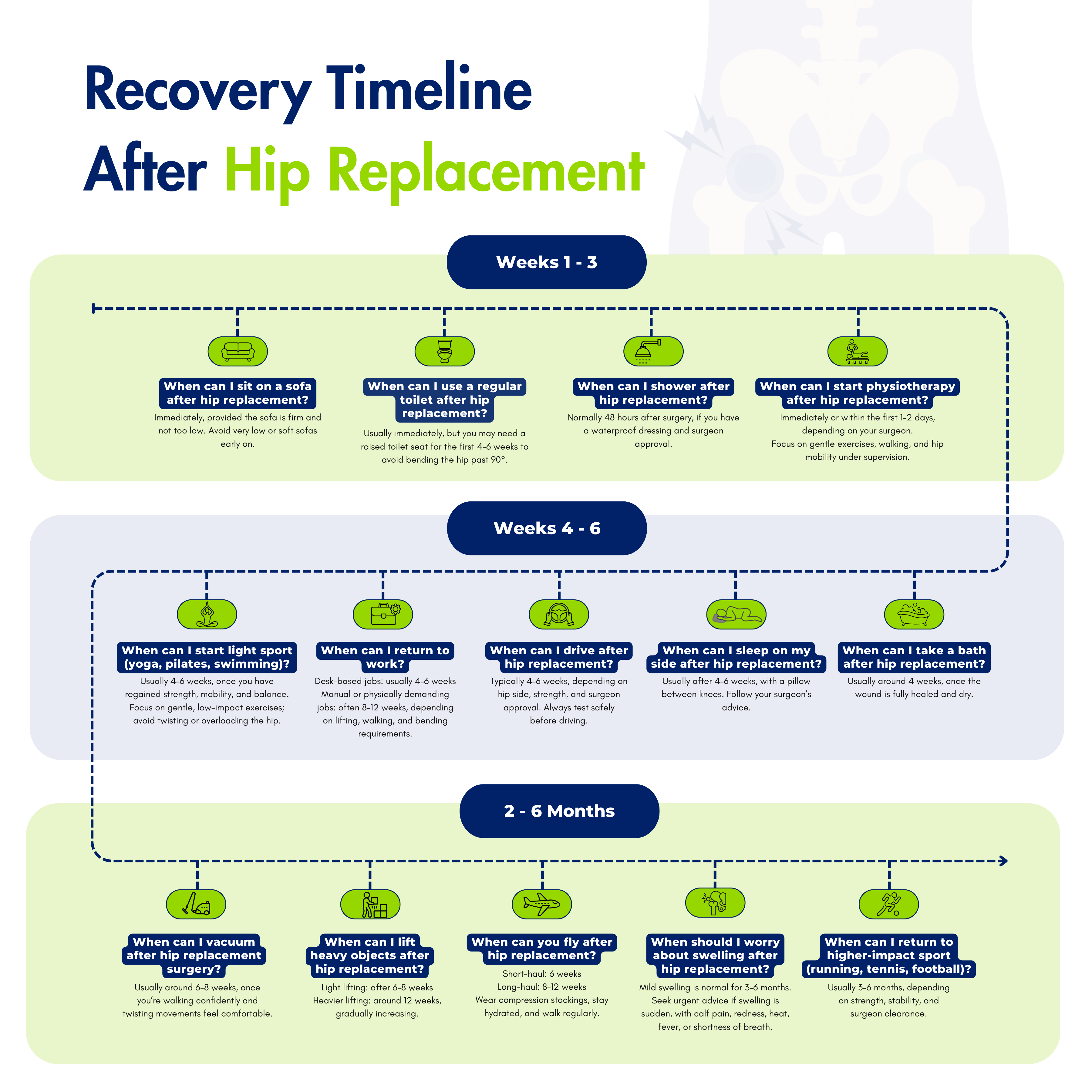
When Can I..?
Follow our infographic for key milestones in a hip replacement recovery journey.
What Are the Risks of Hip Replacement Surgery?
Hip replacement surgery is generally safe, but like any major procedure, it carries some risks. Possible complications include infection, blood clots, joint dislocation, implant loosening, nerve or blood vessel damage, and differences in leg length.
Careful surgical planning, proper rehabilitation, and following medical advice can help reduce these risks.
How Long Does a Hip Replacement Last?
A hip replacement typically lasts 15 to 20 years, although many modern implants can function well for longer with proper care.
Mr Syed Ahmed, Consultant Orthopaedic Surgeon at The Horder Centre, says: “Modern hip replacements are extremely high performing. We choose the hip replacements based on the material, the bearing surface, and the National Joint Registry shows that the survivorship of these is between 15 to 20 years.
“The hip implants are chosen based on the patient's age, anatomy, your level of activity. And what this does is that it allows you to go back to having a naturally moving hip, and all your normal activities fairly early on. So, I certainly wouldn't be worried about longevity in terms of the modern implants.”
Hip Replacement Failure Signs – When to Seek Advice
Signs of hip replacement failure can include persistent or worsening pain, swelling, stiffness, instability in the joint, or difficulty walking. If you notice sudden changes such as increased pain, clicking sensations, reduced mobility, or signs of infection like redness or fever, it’s important to seek medical advice promptly.
Early evaluation can help identify complications and determine whether further treatment or hip revision surgery is needed.
Make an enquiry with our specialist team.
Private Hip Replacement Cost – What to Consider
When considering the cost of private hip replacement surgery, it’s important to look beyond the headline price. Costs may include the surgeon’s fee, anaesthetist, hospital stay, the artificial hip implant, diagnostic tests, and post-operative physiotherapy.
How Physiotherapy Protects Your Hip Replacement Long-Term
Physiotherapy treatment plays an essential role in protecting your hip replacement and maintaining joint function over time. Regular exercises help strengthen the surrounding muscles, improve balance, and support proper joint alignment, which reduces strain on the artificial hip.
Ongoing physiotherapy guidance can also help patients maintain mobility, prevent stiffness, and lower the risk of falls or complications, ultimately helping the replacement joint last longer.
From Diagnosis to Full Recovery – Your Next Steps
Navigating hip replacement involves several key stages: recognizing symptoms, consulting a specialist, exploring non-surgical treatments, and preparing for surgery if needed.
After the operation, following a structured rehabilitation plan, attending physiotherapy, and gradually resuming daily activities are crucial for a smooth recovery and long-term hip health.