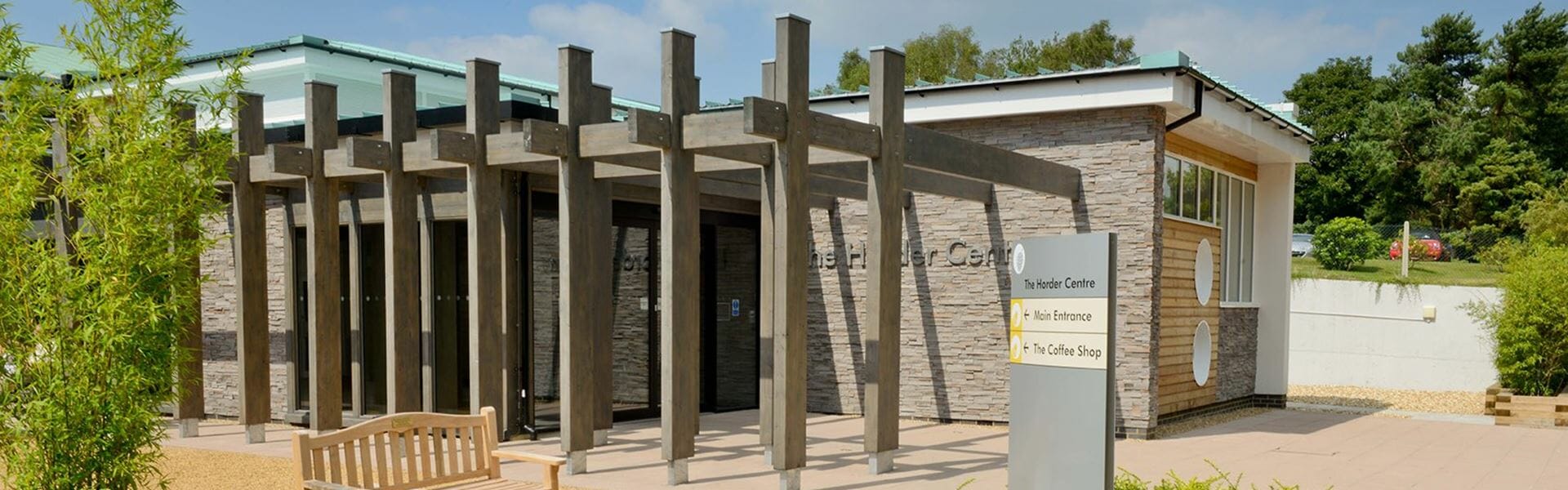
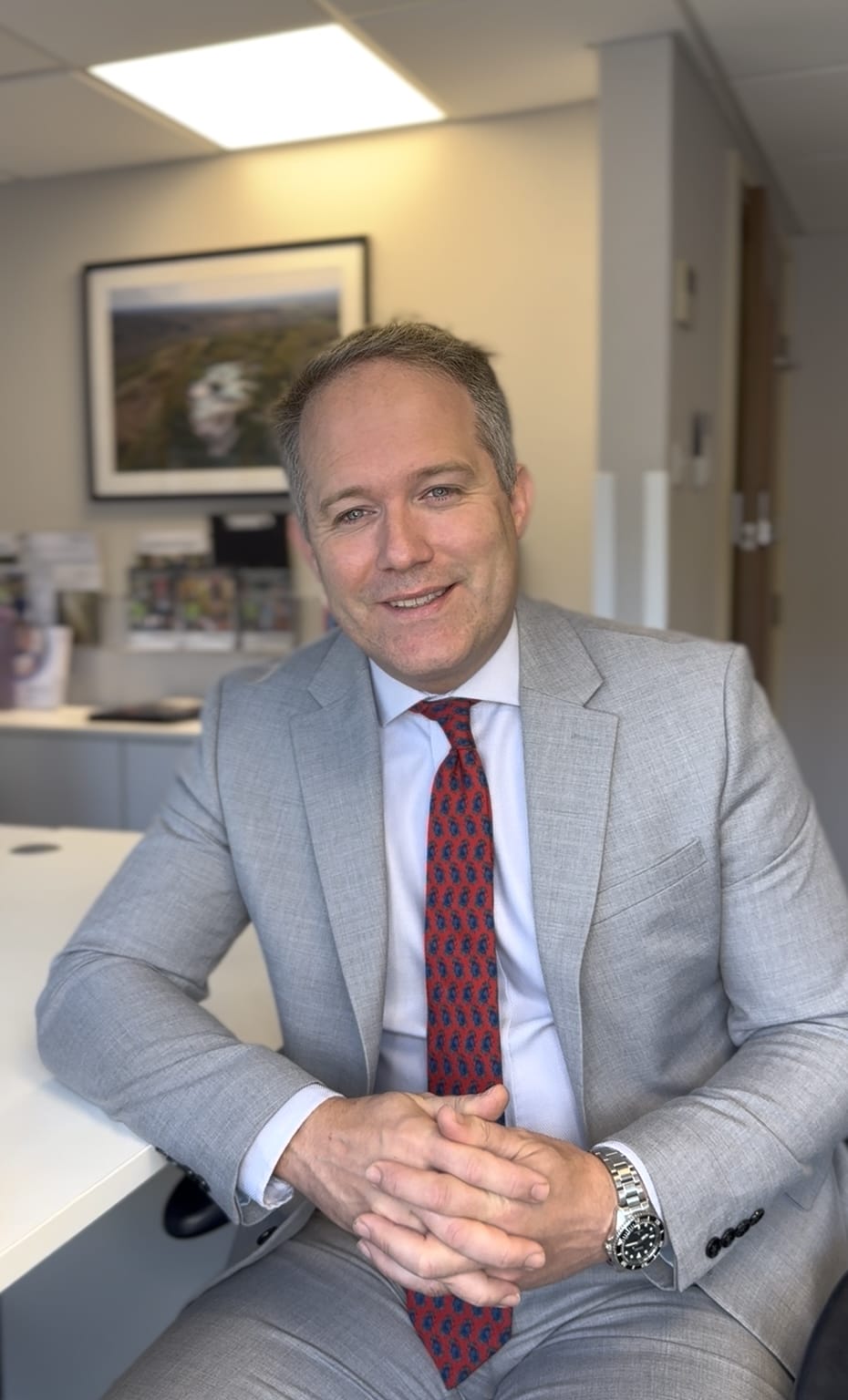
My first guest this morning is Ellen Richardson, who is about to take on the role of chief chief executive of the Horder Healthcare. Ellen, welcome to Ashdown Radio. Thank you. Thank you for having me. Really good to meet you. A big job that you're gonna take on, and we'll talk about that in just a moment. But just tell me a bit about yourself, because I think you've got a long career in health management. Yes, perhaps too long. I have spent my, I spent my career working in the NHS, so I started out as a general management trainee post university and I worked in Staffordshire. I then came down south, worked in Surrey and Sussex Healthcare and I've worked in roles in cancer, cancer services, setting up the sort of hub and spoke model of the cancer network across Surrey, West Sussex and Hampshire. And then I've spent some time in general management, emergency care and then more laterally I moved into sort of the business planning and strategic part of health planning and that's when I moved over to Horder Health Care. I was going say a very wide ranging role. You joined I believe shortly before Covid didn't you? That's right it was probably two years before Covid actually and I joined Horder Health Care looking at sort of business strategy, commercial development, that sort of thing and then overnight we were all sort of sent into this new world of COVID and actually as Horder Health Care we took on quite a big role to support the NHS. So both our hospitals supported local other NHS trusts and I myself moved over to the Macinday Centre in East Grinstead and effectively we became a trauma unit for local patients from the Queen Victoria Hospital so that they were then able to maintain their status as a cancer unit. It was a huge change for us, a huge change And was it literally overnight? The whole thing just flipped? Literally overnight. We worked very closely with our colleagues and we had shared staff across the two hospital sites, but essentially yes we took on a whole new cohort of patients suffering from wounds, dog bites, all sorts of injuries that the Queen Vic would normally treat. Yeah. I think well, a time I'm sure that was pretty pretty difficult for everybody involved, but good you're still here. Tell me just a bit about the Hoarder Healthcare and the hospitals that you've got before we sort of move on, because it can get a bit confusing sometimes. Yeah, that's right. The history started really with the Hoarder Centre back in the 1950s. It was a charity set up for people suffering from arthritis. It was gifted some land and in the 1960s the actual hoarder centre itself was built. But of course medicine moves on, there were drug therapies for arthritis, people didn't necessarily need to be in hospital to receive that treatment anymore, could get that at home. So the Horder Centre became an elective orthopaedic centre doing surgery. And from there they grew and expanded into the Sussex MSK partnership. So we employ a large number of physiotherapists that really look after patients throughout their whole journey really, their whole orthopaedic journey. And then in twenty fifteen the charity bought the Mackendow Centre in East Grinstead, which was a specialist hospital that was originally the Burns Unit, pioneered by Sir Archibald MacKindow who was the World War two surgeon who treated the injured aircrew. So really we became Horder Healthcare having that interest in the whole orthopaedic pathway, having the orthopaedic centre at the Horder Centre and then having a very specialist plastics and reconstructive unit in East Grinstead. So you've the two main centres essentially? Two main centres. So what do you do private work and NHS work, or just one or just the other work? How does it work? So at the Hoarder Centre, we're about seventy five percent NHS, so that's the centre that does the orthopaedic surgery, the joint replacement, and actually the Hoarder Centre does more joint replacement surgery than any other independent sector hospital in the UK, so it's very specialised in that area. At the MacKindo Centre it's a slightly different mix, so it's less NHS and it's more private and people with medical insurance or people who self pay for themselves. So it a mix between the two. Do you think healthcare across the UK is going to go more that way in the future, that sort of mix? I think the evidence is showing us and the research is showing us that younger people are more interested in looking at funding their own healthcare, and that may be just because they want to access diagnostics more quickly and they want to sort of access what might be wrong with them more quickly. They might not necessarily want to pay for the continuous treatment, but certainly we're definitely seeing a shift towards people wanting to access more private health care. So you're going to take on the new role of the chief executive on the first of July. What was the process like to apply for that role? Because I'm I'm expecting this was quite a long and complex process. Actually, it wasn't too bad. So I've been doing the deputy role for for six months. So Richard was planning his retirement and thinking about sort of succession planning. And essentially my process was to go in front of the board and my worth I guess in that way. So an interview with the board, some informal chats with trustees, because we are a charity so we have a board of trustees. And yes, essentially from there that's how we got into this post. So you step into the role on the first of July, what's your thoughts for the future and how do you sort of see Horda Healthcare Centre, MacKindo Centre developing over the next five years? I think fabulous thing about the legacy of the two hospitals, and I should have mentioned as well we have outpatient clinics in Eastbourne and Seaford, but the legacy of the two hospitals and our physiotherapy service is that it's constantly looking to evolve. So I think in the fields that we're in, the specialisms that we're in, what we really benefit from is being specialists in those areas. So we have the opportunity to train people in areas that perhaps they wouldn't see in the NHS. So we have the ability to, at the Macindow Centre for example, we fund a fellow who is resident doctor in the NHS but can come in and get training in the Macindow Centre in things that they wouldn't normally see in the NHS. So I think there's a huge role for us to play in training for doctors going forward. I think there's huge exciting things on the horizon with robotic assisted surgery. I was going ask you, my notes say I asked ask you about the robot. The robot. So at the Warder Centre we do have, we do use robotic assisted surgery in some orthopaedic cases. I think I'd be keen to point out that the surgeon is always doing the operating, surgeon is always in charge, but there are some cases where you can just get that extra element of precision, of less wound with interventional surgery like robot assisted surgery. I guess that's probably the right wording is robot assisted. Yes. You don't have this vision as robot. They'll get all by themselves. It's the robot. The surgeon uses it as a tool to assist, essentially. Yeah. And for the right group of people, that can help with their recovery, faster recovery times, not spending so long in hospital. Yeah. Alena, you wanted to sort of touch on women's health and an opportunity to highlight cervical screening awareness week. Yes, we're just coming to the end of National Cervical Screening Awareness Week and we have, again, I think one of the legacies of both centres is that we do try to look at the patient as a whole and not just their presenting complaint. So we've set up a women's health service primarily out of the Mackendo Centre to really look at that broad spectrum of women's conditions and we have introduced women's health checks, so a very comprehensive set of tests for women in order to be able to assist with any ongoing problems that they have, but also make lifestyle changes if necessary and it all promotes the healing and wellness after surgery. But one of the things that we've also just recently launched is our cervical smear service, which I guess coincides with awareness week this week. Can I ask you about men, whether there are any programmes for men for screening? There's a number of illnesses, I'm thinking of prostate cancer, heart problems, testicular cancer, there's a number of things aligned to men, whether you have anything going in that line? We don't have anything at the moment but it is on our next to do list and I guess that's my to do list now, but very much so. We started out with women's health because the majority of our patients at the Macindow Centre are female, they're not all female but the majority are, so we started there and we want to take the learning from the services that we've set up there into potentially looking at a similar service for for men's health as well. Really good to talk to you this morning. There's loads and loads that we could talk about. Our time is but limited. Have we covered the key points that you want to get across? Is there anything else that we haven't covered that you want to mention as you step into your new role as a chief executive? No. I think we've we've covered everything. That's great. Thank you. Alan, it's really good to meet you. If people like to find out more, I guess you'd like to signpost them to your website. Yes. Website's probably the easiest thing. It's hoarderhealthcare dot co dot uk and from there you can find information on all our services, our expert consultants, the sites that we run. Alan Richardson, the new Chief Executive of Hoarder Healthcare, thank you for talking to me this morning. Thank you.