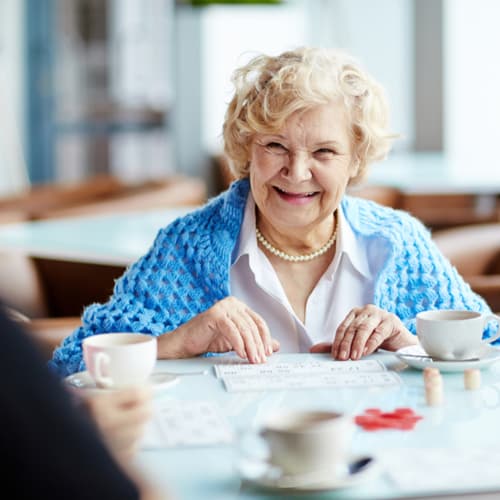
Balance is our ability to continually adjust our bodies to counteract gravitational forces and prevent us from falling over. Balance issues can affect people at any stage of life, although incidences tend to increase with age. It is natural that elements of our balance will decline with age, but this can be reduced by remaining fit & active.
In this video Daniel Dean, Health Fitness Rehabilitation Instructor at Horder Healthcare, takes you through some Balance exercises to help with fall prevention.
Hello and welcome to Boulder Healthcare. My name's Dan, a health, fitness and rehabilitation instructor, and I'm going to take you through some balance exercises. Balance is our ability to continually adjust our bodies to counter our gravitational forces and prevent us from falling over. We mainly use three senses that work in unison to help us maintain our balance. Those are our optical system, proprioceptive system, and vestibular system. The optical system refers to our eyes, which provide us visual feedback to determine our position and movement within our environment. The proprioceptive system, or proprioception, refers to receptors within our joints and muscles, which relay information to our brain on the position of parts of our body. The vestibular system refers to a section of our ears, which play an essential role in sensing head movement. Now, firstly, before we practice any balance exercises, let's just make sure that we do have some support if needed. Okay? For a home, it may well be that you're gonna use your kitchen side or you're gonna use a banister. For me in the gym, I've got this bar for support. Okay? But, again, you may not need it, but just make sure that you have got some support. Okay? We're going to start by working on some weight shifts. And, again, it's a nice gentle entry exercise just to make sure that you feel comfortable with your center position. Okay? A centered position is really important to make sure that we're happy with where we should start the exercise, and then we can challenge things further from there. Okay? Make sure that you're comfortable with your posture as well. Okay? It's very easy to get into a posture where maybe we're leaning too far forwards or allow our pelvis to shift too much. So, again, just give yourself a few moments just to make sure that you're keeping nice and upright, but you're also nice and relaxed as well. From this position, you can just begin to gently shift the weight forwards and shift the weight backwards. Make sure that the soles of your feet remain in contact with the floor. Just gently shifting the weight towards your toes, shifting the weight towards your heels. Okay? And just allow yourself just to gently shift from one direction to the other. You're trying to avoid rocking a little bit like so where those heels and toes might start to lift off. Okay? Again, if you feel you need support to start with, absolutely fine. When you feel comfortable, you might let go and see how that feels. If you're feeling that this is pretty straightforward, you're quite comfortable with this, you may also try it with your eyes closed. Again, it might be worth holding on to start with to make sure that you're nice and stable and just feeling how that weight and the pressure changes through the feet as you work from one direction to the other. When you feel more comfortable, again, with a nice stable stance, keeping that length through the body, we may start to just gently circle around as well. Again, you'll feel the weight and the pressure changes slightly in your feet. And again, it's an exercise you can try with eyes open or with eyes closed. Notice how I'm working in each direction. So you may do a number of repetitions circling one way, followed by the circles in the opposite direction. And you'll try and avoid either those heels or toes lifting off of the floor as you gently circle around. As you get towards the end of the exercise, we're just gonna reduce the size of that circle, spiraling back into that central position. And, again, to finish, make sure that the pressure through your weight is and through your feet is evenly distributed. Make sure you're avoiding any excessive pressure in either your toes or your heels. Once you're more comfortable with your center position and you're happy with your posture, we can try to adapt those feet positions in order to challenge the balance further. Okay? So we're going to start with an exercise called heel toe stance or tandem stance, and that essentially means one foot being placed directly in front of the other. Okay? Now, again, just be aware of your support if you feel you need that to start with. Again, you can progress by performing this, without support when you feel comfortable. Okay? Now I've gone straight into a position where I've got one foot directly in front of the other. You might find that straight away this is quite challenging. So if that's the case, don't worry. Maybe just place the feet slightly further apart. So it's more of a partial heel toe stance. You need to find a position where, yes, your balance is being challenged, but you are able to stabilize the position. Once you feel more comfortable to challenge that position with one foot in front to the other, let's just make sure that we maintain that upright position. There's a nice relaxed position to the feet. Easier said than done, but if you keep that softness through your knees and that gentle length through your back, you'll tend to find you'll relax and react to any change in your balance. Once you feel more comfortable, you may decide to think about certain durations to hold that balance. So, for example, I might try and hold that position for ten seconds. If I'm comfortably holding it for ten seconds, I might challenge that further to twenty and thirty seconds. If you're getting around thirty seconds holding that position consistently, then you may want to challenge it further. Don't forget to try both sides. The other foot in front. Now we might challenge that exercise further by bringing in those other senses. At the moment, when I have one foot in front of the other and I'm looking down the camera, I'm primarily using my visual system. Okay? And I'm able to use a fixed point of reference to help me with my balance. Now if I start to look from one side to the other, that exercise for me feels slightly more challenging. And now I'm starting to use my vestibular system more. Remember, moving your head from side to side. Suddenly, I'm restricting my visual, my optical system by looking from side to side, and I'm having to use that vestibular system more to help me with my balance. Again, it may well be that to start with you're aiming for five head turns to each side. Remember, make sure you make it's comfortable for you. You're making sure that you're not looking too far from one side to the other. Build up that range as you feel more comfortable with the movement. Again, remember to try that with both positions with your feet. Okay? Just alternating that foot position. Let's see if there's one side that's harder than the other. Now I may also challenge that further with bringing in that proprioceptive system more. Okay? There's various ways you can do it, but one simple form for us involves closing those eyes. So, again, find a position that you feel comfortable with, keeping that length through your back. I would suggest to start with when doing this that you have got some support to hand so you get a feel for how this exercise is to start with. Again, making sure you're in that position, let's try closing those eyes and seeing if we can hold that position. Now I know that certainly for me stray around from a lot more twitchy, particularly through that back leg, which is the main support for me. And, it may well be that we're gonna have a count to ten, a count to twenty to try and hold that position before you relax and try on the other sides. Remember, building to those stages and those challenges as you feel more comfortable. When you're starting to feel more comfortable with the heel toe stance, we may start to introduce some heel toe walking. Okay? A little bit like tightrope walking. Okay? Without the tightrope. Okay? Again, it's it's important that we've got some support. Okay? And, again, make sure that there's no there's no obstructions. There's no bits of loose carpet or anything like that where you're practicing. Okay? Make sure that you feel comfortable with the range you're working to. Okay? So, again, I'm just gonna give myself a moment just to make sure I'm nice and upright and not allow myself to scoot forwards, allow myself to sway through the waist. And, again, placing one foot in front of the other, we're gonna see if we can remain looking forwards. Again, maybe with just a little bit of support to start with and then gently bringing one foot in front of the other. Now to give you a little bit more feedback on what the feet are doing, it might be worth just touching that heel to the toes on the trailing leg as you walk through. So you're just aware of how those feet are positioned. Nice and slow as you turn around and walk back the other way. Okay? Sometimes if you spin around, you might just feel a little bit more disorientated. So let's make sure that's nice and slow as we start. Okay? Again, now I'm a bit more comfortable with the exercise. I'm going to try without holding on. And again, trying to keep that nice and stable as I walk forwards. Again, if you get to the stage you're feeling that's quite comfortable for you, it may well be that you try walking backwards as well. Again, that walking backwards and just being aware of the space you have behind you will just challenge that balance a little bit more. Again, to give you a variation with some walking exercises, let's see if we can play with what the lower limb is doing with these exercises. So, again, to start with, we might just walk forwards and backwards, again, with that support available if we need it. And, again, just to make sure that we're comfortable with our walking position as we go to and fro. Now to make that more challenging, I'm going to use some support initially, lift my toes off the floor so the weight is fully on the heels. And then again, walking forwards, keeping those heels or keeping those toes, sorry, elevated. Again, nice and slow as I turn around and then going again. Then you might try this without holding on. The purpose of this exercise is just to strengthen a little bit more through the muscles in the front of the legs, particularly through the shins. Those muscles are really important to lift up the foot as we walk through so that our toes don't scuff against the floor. Again, a lot of instances of people falling over through those, toes scuffing along the floor, maybe uneven pavements involved as we that might include a trip into them. And so, again, strengthening through those muscles, allowing those toes to lift up is really important. Now as well as having those toes off the floor, we might try the opposite with those heels off the floor. Again, I'm gonna use some support to start with, keeping it so I'm looking forwards. And, again, this time walking through with those heels elevated. Okay? This time, it's gonna get me to work on the muscles on back of the legs, particularly the calf muscles. Okay? And, again, those muscles are really important to be strong to help you with walking, but also your balance. Okay? So, again, see if you can work through the number of lengths in that position. Okay? Again, you can dictate how many lengths you're going to go through. Okay? But you need to work to a point where you're feeling a little bit more fatigued through those muscles. So find a number of lengths that work accordingly for you. So the main exercise that we might associate with balance is our single leg standing. As you've seen already, there's a few other exercises that you can work on which don't involve single leg starts, but it is really important if we are going to improve our balance and our leg strength as well. Okay? Again, as always, we're gonna make sure that we have some support available. Okay? And to start with that single leg balance, again, it's making sure that you have that strength on the leg you're gonna stand Okay? So, again, just incorporating those weight shifts. Maybe just a little bit more side to side now just to make sure that the legs are comfortable. And then shifting that weight onto one leg. Again, if you need support, make sure you've got it. And from there, we're gonna see if we could slowly lift one leg up and hold that position. Try to avoid positions where you're looking down at the foot. Again, you wanna maintain a nice upright stance as you hold that single leg balance. Again, it may well be that you're gonna decide a certain length of time to hold it. Again, ten seconds is a nice round number to start with, but then you might build out to those twenties, thirty seconds. Now, obviously, make sure that you alternate onto the other leg as well so that you are working on balance on each side. Okay? It may well be that there's one side that's much easier than the other to start with, but as you progress, you should find that there's a little bit more symmetry from one side to the other. Now as previously, we might try to increase that challenge further by challenging those other senses. Okay? So, again, when you're feeling more comfortable with your single leg balance, let's see if we can adopt that position, shifting the weight onto one leg, elevating the other side. Okay? And as previously, we're gonna see if we can challenge that vestibular system a little bit more. Seeing if you can slowly look from one side, then over to the other. Straight away, I know this is slightly more challenging for me. I'm having to work really hard through my standing leg. So slowly look from one side to the other. Looking fast might just make things a little bit too disorientating, so keep it slow. Make sure you work within a range that is comfortable for you. And, again, it may well be that you decide on a certain number of repetitions from one side to the other. Let's maybe go with fives to start with. Slowly relax back down to that start position. Again, let's make sure we practice that on both sides. Again, elevating the leg, making sure we've got that balance, and then let's see how we're gonna when we start looking from side to side. And, again, making sure you work within a range that is more comfortable for you. You can start to look further when you feel you want to challenge things that little bit more. Now the last challenge when it comes to single leg balance, okay, is to see if we can really start to challenge that proprioceptive system. Again, there's a few ways we can do this. You might have used a wobble cushion or wobble boards. Okay? But one very simple way of utilizing this at home is to close those eyes. Okay? Taking away that optical system really gets you to challenge those senses in the ankles and the legs. Again, to start with, make sure you've got some support. Okay? Making sure that the weight is focused on one leg, keeping that length through the body. And then once you're in that single leg position, let's see if we can close those eyes. Letting go with support, you'll immediately find that's gonna really challenge that balance. Okay? Again, if you can hold for five seconds to start with, that would be a really good focus, really good goal to aim for. As always, we're going to practice on both sides. Again, make sure you've got the support if you need it initially, holding that position and then closing those eyes and see if we can hold that position. And as always, you might find this one side slightly harder than the other. But, again, you can focus on improving that balance as you practice more and more. Thank you for joining us. I hope you found these exercises useful. Remember to work with your new arm capabilities when performing these balance exercises. For more information, look at our website.

Daniel Dean
Graduate Sports RehabilitatorWhat makes Horder Healthcare unique
Horder Healthcare is committed to providing the very best quality of care for our patients and customers. We are continuously working on improving and reducing risks and this is reflected in our consistently high CQC results, patient satisfaction questionnaires and minimal levels of infection.

We are a charity
We reinvest our profit to benefit more people and help us achieve our aim of advancing health.